


A selfie stick makes more sense when the camera needs to move with you. It is quick to pull out, easy to carry, and useful for hiking clips, travel vlogs, action-camera angles, and 360 shots.
A tripod is the better choice when the camera needs to stay in one place. It works best for solo photos, group shots, time-lapses, sunsets, low-light scenes, and longer hands-free recordings.
A 2-in-1 selfie stick tripod sits somewhere in between. It saves space and covers both handheld and stationary shooting, but compact built-in legs rarely match a dedicated tripod in wind, on uneven ground, or at full extension.
The simple rule: use a selfie stick when the camera moves with you, a tripod when it stays put, and a 2-in-1 model when packing light matters more than maximum stability.
|
What do you want to shoot |
Best option |
Why |
|
Hiking or walking footage |
Selfie stick |
Fast setup and flexible angles |
|
Full-body solo travel photos |
Tripod or 2-in-1 |
Let's you step into the frame |
|
Campsite or group shots |
Tripod |
Keeps the composition steady |
|
Outdoor vlogs |
Selfie stick or 2-in-1 |
Handles both moving and short static shots |
|
Sunrise, sunset, or time-lapse |
Tripod |
Holds the same framing over time |
|
360 third-person shots |
Selfie stick |
Creates more distance and a floating-camera look |
|
Minimalist travel setup |
2-in-1 |
Combines two tools in one |
|
Windy or uneven locations |
Dedicated tripod |
Offers a wider and more stable base |
|
Cycling, skiing, or climbing |
Activity-specific mount |
Safer than using an extended pole |
Selfie Stick vs Tripod: What’s the Difference?
The obvious difference is that you hold a selfie stick while a tripod stands on its own. The more useful difference is how each one changes the way you shoot outdoors.
A Selfie Stick Keeps the Camera With You
A selfie stick extends your reach and lets you change angles without stopping. You can lift the camera above eye level, drop it close to the ground, move it to the side, or include more of the landscape behind you.
That makes it useful for walking introductions, trail updates, environmental selfies, low-angle action shots, and quick changes between views.
A tripod gives the shot a fixed point of view—useful when you want to walk into the frame, keep the horizon level, or hold a single composition.
Portability, Stability, and Control
|
Feature |
Selfie stick |
Tripod |
|
Main use |
Moving, handheld footage |
Stable, hands-free footage |
|
Setup time |
Usually faster |
Takes more adjustment |
|
Portability |
Often lighter and slimmer |
Varies by size and leg design |
|
Camera movement |
Easy to reposition |
Designed to stay fixed |
|
Solo full-body photos |
Limited |
Much easier |
|
Time-lapse and low light |
Not practical when handheld |
Better suited |
|
Uneven ground |
Not an issue while held |
Depends on the legs |
|
Load support |
Usually for lighter setups |
Often handles more weight |
Three legs do not guarantee stability. A narrow tabletop stand at full height may be less secure than a lower tripod with a wider stance. Likewise, extra selfie-stick length creates dramatic angles but also adds shake and arm fatigue.
Your Camera Type Matters
A smartphone, action camera, and 360 camera all behave differently on a stick or tripod.
A phone often needs a clamp, remote shutter, and reliable portrait-to-landscape rotation. Large phones and heavy cases can make a compact stand top-heavy.
An action camera is lighter, but you still need to check the mount. Some products use a three-prong action-camera connection, while others rely on a standard 1/4-inch screw or an adapter.
With a 360 camera, alignment matters as much as compatibility. A narrow stick positioned directly beneath the camera is more likely to disappear in the stitched image. A wide adapter, thick handle, or open tripod base may still show.
Accessories add weight too. A cage, clamp, microphone, light, or lens guard can change the balance. Compatibility only counts when the complete setup stays secure at the height and angle you plan to use.

When Should You Choose a Selfie Stick Outdoors?
A selfie stick works best when speed, movement, and flexible framing matter more than hands-free stability.
Hiking, Walking, and Travel Vlogs
Outdoor moments rarely wait for a full setup. A selfie stick lets you react quickly when the trail opens or the light changes.
It works well for walking footage, quick high or low angles, and wider environmental selfies. For vloggers, it also creates a more natural distance than holding a camera at arm’s length.
Longer is not always better, though. A fully extended pole can exaggerate small hand movements and become tiring over a long hike. For everyday trail use, a shorter, easier-to-control stick is often more practical than the longest model available.
TELESIN offers compact, extended, carbon-fiber, charging, and floating options because outdoor creators do not all shoot the same way. The best length is the one you can control comfortably.
Action Cameras and 360 Shots
With an action camera, a selfie stick can create low tracking shots, high campsite views, side profiles, follow-style footage, and wider perspectives.
For 360 cameras, the stick can create the familiar floating-camera effect. That result still depends on the camera, software, mounting angle, and the width of any adapter attached below it.
Before an important shoot, record a short test. Check the pole alignment and make sure the handle, adapter, or folded legs are not visible.
Extra-long poles can produce striking overhead or third-person views, but they need open space. Watch for branches, power lines, other hikers, and location rules. They are creative tools, not always the best option for routine walking footage.
Beach, Kayaking, and Underwater Use
Water changes the decision.
A normal stick may be fine near a lake without being safe to submerge. Look for a wrist strap, wet-grip security, corrosion resistance, and a clearly stated waterproof or floating design.
A floating grip reduces the chance of losing a lightweight action camera. Tripod mode can also help with short shots on a dock or flat beach when conditions are calm.
After saltwater use, rinse the accessory with fresh water, clear sand from the joints, let it dry fully, and check the locks before your next trip.
When a Selfie Stick Is the Wrong Tool
A selfie stick is not the right choice when the shot depends on the camera staying completely still.
Use a tripod for:
- Long time-lapses
- Night or low-light photography
- Long campsite tutorials
- Group photos where no one can hold the camera
- Interviews with consistent framing
- Repeated shots that need the same composition
It is also not a replacement for a helmet, chest, bike, or vehicle mount during high-intensity sports. Holding an extended pole while cycling, skiing, climbing, or driving can affect control and put other people at risk.
When Is a Tripod Better for Outdoor Shooting?
A tripod becomes more useful as soon as the camera needs its own stable position.
Solo Travel Photos and Group Shots
A handheld selfie usually shows your face and part of the background. A tripod gives you room to show the whole scene—standing below a waterfall, walking across a ridge, or sitting outside a tent at sunrise.
Frame the shot, step in, and use a timer, remote, or app.
Before walking away from the camera, check the area. Avoid placing the tripod in a trail, bike lane, loose gravel, strong wind, or near an exposed edge. A better composition is not worth a damaged camera.
Time-Lapse, Sunrise, Sunset, and Low Light
A sunrise, moving clouds, or a low-light landscape may require the camera to stay in place for several minutes.
A tripod helps you hold the horizon, repeat the same framing, and avoid small movements between shots. It also makes slower shutter speeds more practical.
Use the lowest height that still gives you the composition you want. Extending every section raises the center of gravity and gives the wind more leverage.
Campsite Videos and Hands-Free Recording
At a campsite, a tripod acts like a second camera operator for tent setup, cooking, gear reviews, or talking-head footage.
A small 2-in-1 model may be enough for a short clip on flat ground. A longer unattended recording calls for something more stable. The difference is not only camera size; it is how long the shot lasts and what could happen if the weather changes.
Wind and Uneven Ground
Outdoor stability depends on the whole setup.
|
Factor |
Why it matters |
|
Leg spread |
A wider footprint is harder to tip |
|
Camera height |
More height raises the center of gravity |
|
Pole length |
A longer extension increases movement |
|
Ground type |
Sand, gravel, and grass can shift |
|
Device weight |
Extra accessories change the balance |
|
Wind direction |
Side wind puts more pressure on the setup |
On rough ground, keep the camera low and make sure every foot has solid contact. On windy days, stay close enough to catch the setup if conditions change. Do not leave a compact tripod unattended near water, cliffs, or busy paths.
A small tripod can be perfectly useful outdoors. It simply needs to be used within its limits.
Is a 2-in-1 Selfie Stick Tripod Worth It?
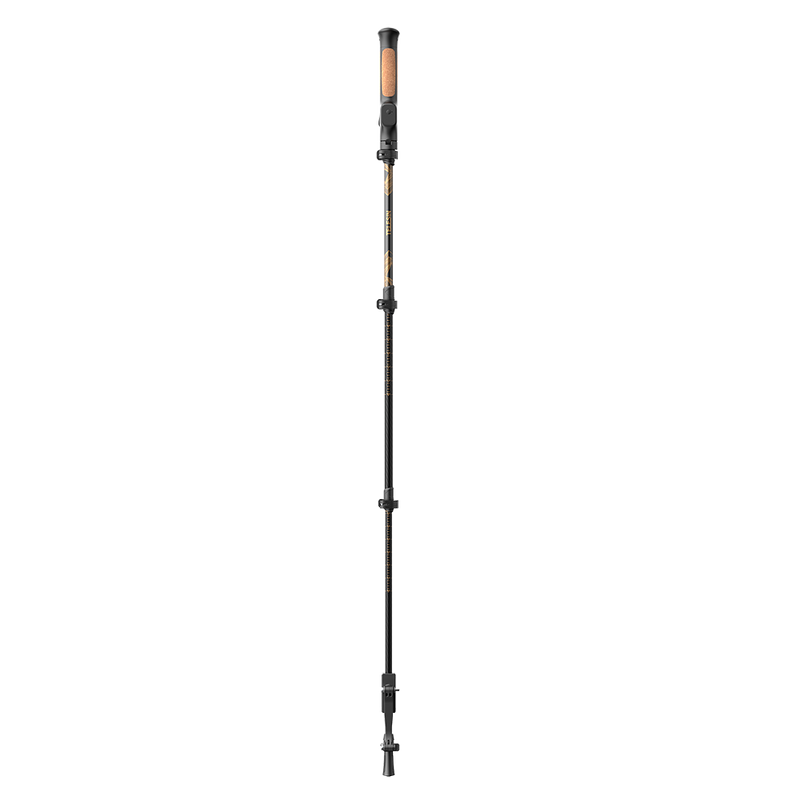
For many travelers, yes. A 2-in-1 model switches from handheld to freestanding use without adding another item to the bag, though one structure has to do both jobs.
Who Is It Best For?
A selfie stick tripod suits solo travelers, light-packing hikers, outdoor vloggers, families taking quick group photos, and action- or 360-camera users with lightweight setups.
It works best when tripod mode is useful but secondary—for example, using the stick through most of a hike, then opening the legs for a quick viewpoint photo.
The Main Trade-Offs
Built-in legs take up space inside or around the handle. Depending on the design, that can affect grip thickness, weight, folded size, maximum length, leg width, and bottom mounting options.
Some creators prefer fewer loose pieces. Others choose a plain stick with a separate base for a wider stance or easier upgrades. Neither setup is automatically better.
An integrated model makes more sense when fast switching and simple packing matter most. Separate components are better when you want a wider base, more mounting options, or the freedom to upgrade parts later.
Can It Replace a Regular Tripod?
Sometimes.
A 2-in-1 model can work well for quick solo photos, short vlogs, low camera positions, sheltered campsites, and lightweight cameras on firm ground.
It is less suitable for strong wind, long time-lapses, uneven ground, heavy rigs, full-height unattended shooting, or exposed edges.
The real question is whether it is stable enough for your device, height, ground, and weather.
Built-In Legs or a Separate Tripod Base?
|
Setup |
Best for |
Main drawback |
|
Built-in tripod legs |
Fast switching and simple packing |
Usually, a smaller footprint |
|
Plain stick with detachable base |
Flexible travel setups |
One more part to carry |
|
Plain stick plus dedicated tripod |
Maximum control and stability |
More bulk and weight |
|
Floating stick with tripod mode |
Water-based use with light cameras |
Limited to its intended use |
Before buying, check the bottom thread, leg width, load rating, device connection, and whether the base may appear in 360 footage.
TELESIN’s range includes both integrated and more specialized designs, so you can choose between convenience, reach, water use, charging, and a lighter handheld setup instead of forcing one product to cover every situation.
Selfie Stick or Tripod: Which Should You Pack?
Base the decision on the shot you are most likely to make.
|
Outdoor activity |
Better option |
|
Hiking and walking footage |
Selfie stick |
|
Solo photos at viewpoints |
Tripod or 2-in-1 |
|
Camping group shots |
Tripod |
|
Travel vlogging |
Selfie stick or 2-in-1 |
|
Sunrise and sunset |
Tripod |
|
Time-lapse recording |
Tripod |
|
360 walking footage |
Compatible selfie stick |
|
Beach or kayaking |
Waterproof or floating grip |
|
Minimalist day trips |
2-in-1 |
|
Windy or uneven locations |
Dedicated tripod |
|
Cycling, skiing, or climbing |
Activity-specific mount |
Match the Support to Your Camera
For a smartphone, pay attention to clamp width, case compatibility, portrait rotation, remote control, and how stable the setup feels with the phone mounted sideways.
For an action camera, check the connector, quick-release system, wrist strap, waterproofing, and whether the product is intended for high-movement use.
For a 360 camera, focus on pole alignment, stick width, adapter size, and whether the tripod base enters the stitched image.
FAQs
Q: Is a selfie stick or tripod better for hiking?
A: A selfie stick is better for filming while you walk and changing angles quickly. A tripod is better for solo photos, group shots, and time-lapses. A 2-in-1 model is a practical middle ground for hikers who want both without carrying two separate tools.
Q: Can a selfie stick tripod replace a regular tripod?
A: It can replace a small travel stand for quick photos and short videos. It may not replace a dedicated tripod in strong wind, on uneven ground, at full extension, or with a heavier camera setup.
Q: Is a 2-in-1 selfie stick tripod stable outdoors?
A: It can be stable with a light device, low height, fully opened legs, and firm ground. Wind, soft terrain, and extra extension all reduce stability.
Q: Will the tripod base appear in 360 footage?
A: It might. The result depends on the camera, the pole’s alignment, the adapter width, and the base design. Always record a short test before an important shoot.
Q: Should I buy a plain selfie stick and a separate tripod base?
A: Choose separate parts if you want a wider base, a bottom mounting thread, or more room to upgrade later. Choose an integrated model if faster setup and fewer loose pieces matter more.
Q: Can I leave a selfie stick tripod unattended outdoors?
A: Avoid leaving it unattended in wind, near water, on a ledge, in a crowded area, or at full extension. Stay close enough to protect the camera if conditions change.
Q: Which option is best for solo travel?
A: A 2-in-1 model is often the most convenient because it handles both walking footage and self-portraits. A dedicated tripod is better when fixed photography is the main priority.
Q: Can I use a selfie stick tripod for cycling or skiing?
A: A casual selfie stick tripod is not the safest choice for high-intensity sports. Use a purpose-built helmet, chest, bike, or body mount designed for that activity.
Q: What tripod height works best for outdoor selfies?
A: Use the lowest height that gives you the framing you want. Moving the camera farther away is often safer and more stable than extending it to maximum height.
Q: What should I choose for an action camera?
A: Use a selfie stick for moving angles, a tripod for stable hands-free shots, and a 2-in-1 model for mixed travel use. Check the mount, load rating, and environmental protection before buying.
Final Verdict
Pick a selfie stick for hiking clips, travel vlogs, creative action-camera angles, and 360 shots that move with you.
Pick a tripod for solo photos, group shots, time-lapses, low-light scenes, and longer hands-free recordings.
Pick a 2-in-1 selfie stick tripod when you want to keep your kit light and mostly shoot with a phone, action camera, or 360 camera in moderate conditions.
Go with separate tools when you need both maximum reach and dependable outdoor stability.
TELESIN builds sticks, grips, tripods, and specialized outdoor camera accessories around these different shooting styles. The goal is not to carry more gear. It is to carry the right support for the way you actually create.


